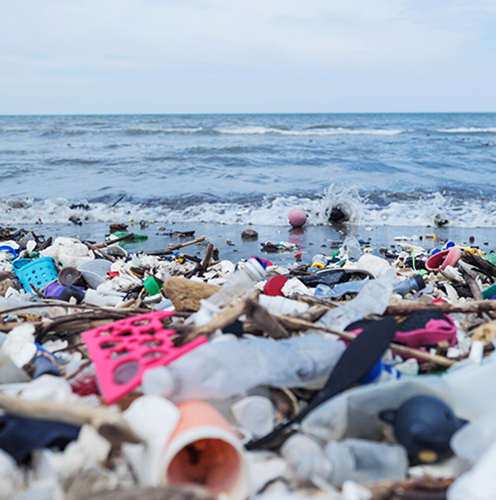
Worldwide consumption of plastics is ballooning. More than half of the plastics ever made were created after 2000. On the current trajectory, annual global production is expected to double by 2050.
With much of this plastic being single-use, and less than 10% of plastic waste currently being recycled, the output will continue to foul land and marine environments around the world.
Two studies published in Nature demonstrate the urgency of the situation:
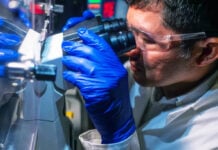
In the first study, Sophie ten Hietbrink at Utrecht University in the Netherlands and her colleagues focused on nanoplastics, which consist of particles measuring less than 1 micrometre in diameter using sophisticated mass-spectrometry techniques to measure the prevalence of these particles in the Atlantic Ocean.
They found nanoplastics in all of the samples they collected, from coastal regions to the middle of the ocean, and at various depths. In just the uppermost layer of the temperate to sub-tropical North Atlantic, the team estimates that there could be 27 million tonnes of nanoplastics. This is in the same range as, or exceeds, some previous estimates of the amount of marine plastic waste present across the entire global ocean, the authors say.
In the second study, Laura Monclús at the Norwegian University of Science and Technology in Trondheim and her colleagues identified more than 16,000 individual chemicals found in plastics or involved, intentionally or otherwise, in their manufacture. Among these, they pinpointed more than 4,200 ‘chemicals of concern’ – those that do not naturally break down in the environment, for example, or that are toxic.
This emerging science underscores the need for a meaningful treaty text to include curbs on production and set ground rules for better regulation.
A ‘high ambition coalition’ of more than 70 parties – including the European Union, Australia, Canada and the United Kingdom – have signed statements pushing for a treaty that includes measures to cut back and regulate the production of chemicals of concern. The United States was not a party to this coalition, and its current position is unclear.

Independent Action
Groups of countries have been starting to act independently. The EU, for example, in 2019 adopted its single-use plastics directive, an EU-wide law designed to reduce the manufacture of single-use plastics. The directive sets a target for 90% of all plastic bottles to be collected for recycling by 2029, with an interim target of 77% this year.
Also from this year, all drinks bottles made from the plastic polyethylene terephthalate, or PET, should incorporate at least 25% recycled material.
Other places, including Canada and New South Wales in Australia, have introduced bans on certain single-use plastic items.
Such initiatives are to be welcomed, but more needs to be done. Finding alternatives to plastics will support the creation of new industries and jobs; and tomorrow’s generations also need a viable planet.
SOURCE: Nature