Are you feeling a little burned out? You’re not alone. Many things can get in the way of taking care of ourselves, but ultimately when we do take care of ourselves and our needs, we’re better able to show up for other people in our lives.
Try Chilling Out With Music
Listening to your favourite music has been shown to improve your mood due to the dopamine release that follows. Dopamine, a neurotransmitter involved in feelings of pleasure and motivation, is part of your brain’s reward system.
In fact, there’s a whole modality dedicated to the power of music, aptly called music therapy, which employs music, including elements like rhythm and lyrics, to help people improve their mental, emotional, physical, social, and cognitive wellness. Music therapy can involve any combination of listening to, creating, singing, or moving to music.
Music therapy has been found to lessen symptoms in people with mood disorders like anxiety and depression, as well as lift self-esteem, aid in developing problem-solving skills, and reduce stress.
It also has longer term impacts on symptoms of some chronic or degenerative conditions such as chronic pain, Parkinson’s, dementia, cancer and traumatic brain injuries.
Take Your Holidays
Take your holidays. According to a survey from the American Psychological Association of over 1,500 American workers, planned time off work leads to positive mental health outcomes and signs of stress recovery, like sleeping well.
Of course, not everyone has the luxury of paid time off work or the ability to go on a long trip. The good news: A staycation can be impactful, too, even if you’re just at home catching up on Netflix.
If you’re able, you could take one of those allotted vacation days from work, book a babysitter if you’re the caregiver at home, or even pledge as a family to have one weekend day with no appointments, nowhere to be, and no agenda.
Stand Up and Stretch
Although a full-on workout is helpful for taking care of yourself, sometimes all you need is to change your body position for about 15 to 30 seconds to give yourself a restart.
When you make a conscious and physical shift like standing up and stretching, your mind recognises the change and responds in a beneficial way. Try standing up and stretching your arms high overhead, bending over to touch your toes, or sitting on the floor in a cross-legged position for a hip-opening stretch.
This can be especially important for people who work at a desk. Sitting in a slumped posture can drag down your day, making it tougher to shake off negative emotions.
Research has found that when people with mild to moderate depression adopted a more upright position while performing a stressful task, it reduced both fatigue and anxiety.
Hunching over a computer or phone all day can unintentionally cause soreness and stiffness, a condition known as “tech neck.” To pick yourself up into positivity, straighten your spine and pull your shoulders back.
Call a Friend or Family Member
Ample research links positive social connection with mental and physical wellbeing, including the influence that connections have on longevity.
According to the Centers for Disease Control and Prevention, social connection has important effects on both physical and mental health:
- Lessens chances for illness and diseases like dementia, heart disease, and stroke
- Increases your ability to manage stress and cope with mental health conditions like depression and anxiety
- Improves sleep quality
Maintaining social connections is paramount, and you can tend to them in many ways. It can be tough to keep up relationships when things get busy, especially if you’re balancing work and caregiving. If you’re struggling to make time, consider starting small and making a schedule:
- Set a recurring event on your phone’s calendar to remind you to call a good friend
- Ask a friend who lives nearby to go to the shops with you

Use Social Media Mindfully
Social media can be hard to avoid. It can be a useful tool, but it also has the potential for negative mental health effects.
According to Khan, one of the reasons that social media can be tricky is the “comparison trap,” he says. “People don’t tend to post the nitty-gritty reality of their lives, and seeing curated highlights of others’ lives can lower one’s sense of self-worth.”
The constant barrage of information and news can be stressful, he adds, ultimately leading to a person becoming overstimulated or anxious. Some suggestions Khan offers for using social media more mindfully:
- Set strict time limits
If you’re struggling to hold yourself accountable, you can set screen time limits on your smartphone.
- Follow mental health-focused posts
Bring accounts that promote self-care into your feed.
- Listen to your mind and body
Do a social media detox whenever you’re feeling overwhelmed.
However, social media isn’t all bad. Khan acknowledges that if used properly, it can be a tool for self-care and can foster these benefits:
- Community
You can lean on online support groups or wellness communities to improve your mental health.
- Gratitude
Spend some time participating in digital gratitude challenges.
- Accessibility
Therapy sessions aren’t always an option, and social media can act as a vehicle to find guided meditations and mindfulness content.
Take a Microbreak
If you find yourself hitting a wall in the middle of the day, it’s okay to take a break, even if that means lying down. These mini rest periods – or microbreaks – can help lessen fatigue and re-energise you to stay on target for the rest of the day at work, according to one study.
If lying down or taking a nap doesn’t feel like what you need, Khan suggests other micro self-care moments like deep breathing or enjoying a cup of tea.
Sometimes taking a break can feel difficult, especially if you’re caring for others. “The issue that caretakers have is that they often prioritise others while neglecting themselves, and this leads to burnout and compassion fatigue,” Khan says.
“The key is to redefine self-care as an obligation, not an option.”
If you’re struggling to take time away, Khan says to ask for help. “Seeking support, even short respites from caregiving duties, prevents exhaustion and will actually improve your ability to be there for your caregiving duties,” he says.
Khan also suggests incorporating self-compassion exercises. “It’s crucial to recognise that caring for yourself makes you a better caretaker to others,” he says.
Reframe Self-Care as a Necessity
One of the reasons we’re able to so easily neglect our needs when it comes to self-care is because we view it as optional – an extra, nice-to-have task on our already long to-do list. Part of the work is shifting this mindset.
Reframe self-care as a form of everyday maintenance, not a luxury.
“It can help to think of self-care as a mental oil change, so to speak: something necessary for longevity and not just an emergency fix,” Khan says.
Khan suggests scheduling self-care the way you would an important appointment. “Truly put it on your calendar and honour it as non-negotiable,” he says.
Declutter a Pesky Part of Your Home
For some, tidying is a form of self-care. And according to experts, the more cluttered someone’s home is, the lower their reported satisfaction with life is.
Clutter can make you feel more stressed and anxious, harm your productivity, and may even affect your sleep, especially in extreme cases.
Take 15 minutes a day to tackle the messiest part of your home – even if it’s just a junk drawer that’s always full.
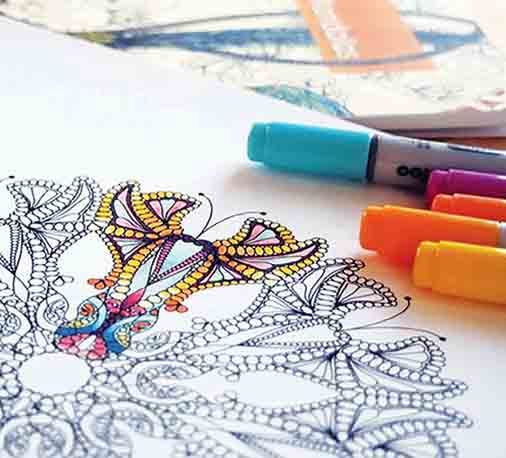
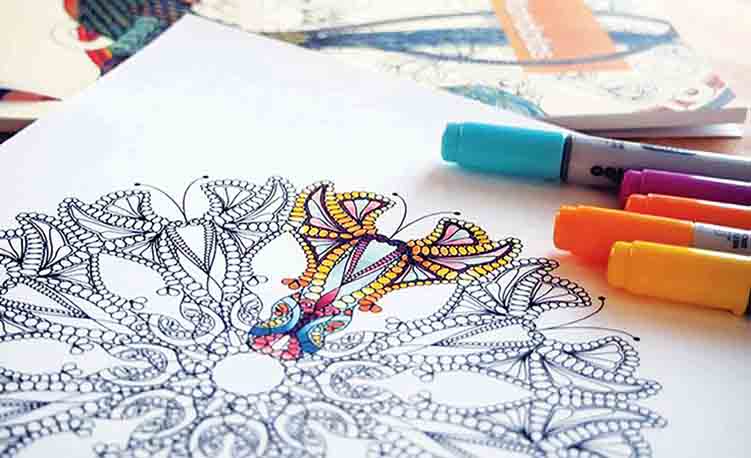
Get Creative by Doing Some Colouring-In
Creative outlets are a way to reduce stress, and one method that may not immediately come to mind for adults is colouring-in. Using a colouring-in book can be relaxing for three reasons:
- It shifts your attention
You are no longer focusing on yourself, your to-do list, or your inbox but rather the lines and colours in front of you.
- It relaxes the brain
The simplicity of the activity can feel rewarding to the brain.
- There’s no pressure
Because there’s nothing riding on the outcome, it makes the entire experience more enjoyable.
Colouring-in and other creative and artistic endeavours like drawing, painting, or knitting can be relaxing for a lot of people.
For some, it’s a chance to tune out other distractions and focus on one thing at a time. For others, it’s an outlet to express emotions – maybe you paint with bold, bright colours because you’re experiencing strong feelings. Don’t underestimate the power of art to ease your mind and bring you joy.
Try Aromatherapy
Aromatherapy has roots in several cultures going back thousands of years, and it is understood to be a form of self-care. It works because of the effect that essential oils have on your nervous system, leading to the release of feel-good hormones.
Based on scientific research, aromatherapy is thought to reduce anxiety, improve quality of sleep, and relieve symptoms of depression.
Scents like cedarwood, lavender, and vanilla are popular, but everyone is different. Try a variety of candles, essential oils, or incense to see what makes you feel the most at ease.
SOURCE: Everyday Health