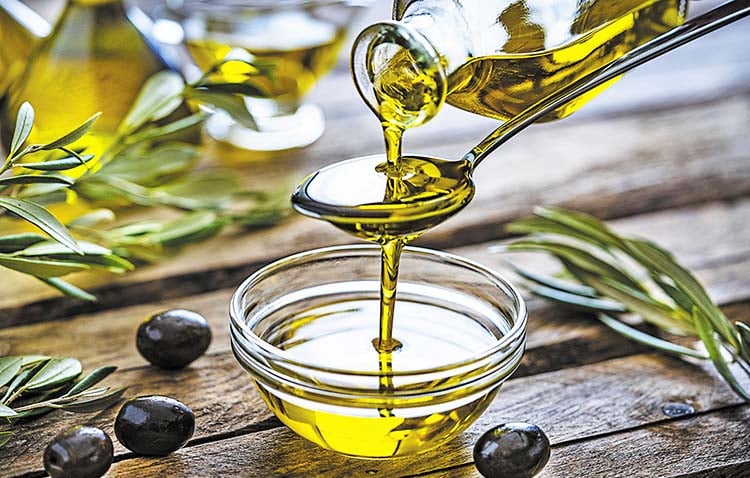
If you’re even a little health-conscious, you’re likely using olive oil to dress salads and roast vegetables. But some people are going further and not just eating olive oil – they’re also drinking it.
On TikTok, @byzareefa says that her daily olive oil and lemon juice shot helps her achieve healthy, glowing skin; @thejenjones says her olive oil-based “elixir” helps with lymphatic drainage, detoxification, and immunity. Extra virgin olive oil evangelist @oliveoilqueen, a new mother, claims that drinking the oil boosts her breast milk quality, postpartum skin, and energy levels. These claims may have you wondering: Should you drink olive oil shots?
What Are the Potential Health Benefits of Olive Oil?
Olive Oil and Disease Prevention
“Including olive oil in the diet has been linked to improved heart health and reduced risk of certain types of cancers, as well as promoting satiety and overall digestive health,” says Emma Laing, PhD, RDN, the director of dietetics at the University of Georgia in Athens.
One study analysing data from 22,000 Italian men and women concluded that higher olive oil consumption was tied to lower rates of cancer, heart disease, and mortality, regardless of overall diet quality.
Eating a Mediterranean diet, which includes olive oil in moderation, may lower the risk of breast cancer by 13 percent, according to a meta-analysis of 31 studies.
Another study found that consuming olive oil (1.5 to 2 teaspoons daily) was associated with a 28 percent lower risk of dementia-related death.
Olive Oil and Nutrient Absorption
Olive oil helps the body absorb fat-soluble vitamins (like vitamins A, D, E, and K) from other foods, says Dr. Laing: “When you add olive oil to your salad, for example, you’re helping your body absorb these fat-soluble vitamins more efficiently.”
Olive Oil and Gut Health
Olive oil can contribute to a healthy gut, Laing notes. According to one study, consuming 3 to 4 tablespoons of extra-virgin olive oil daily may stimulate the growth of beneficial microorganisms in the gut microbiome.
One caveat: Although olive oil has benefits for gut health, claims that it can help reduce bloating are anecdotal. “It might work for some people, but not everyone,” Laing notes. “This is because we all don’t have the same eating pattern, nor do we have the same factors that also influence digestion – like stress, hormonal fluctuations, medications, food intolerances, and physical activity patterns.”

Is Drinking Olive Oil Better Than Eating It?
The scientific data doesn’t suggest that you need to throw back olive oil shots to improve your health.
“There isn’t strong research to suggest that any of the potential benefits couldn’t be achieved through incorporating olive oil into recipes, rather than drinking it straight up,” says Maddie Pasquariello, RD, a registered dietitian in Brooklyn, New York.
“If you already eat a balanced diet, it’s unlikely that you need to be adding more oil to achieve benefits for health,” says Pasquariello. “If you’re already using high-quality olive oil in your cooking, and using it in the right preparations, you’re getting the benefits.”
What Are Potential Issues With Olive Oil Shots?
“Drinking small amounts of olive oil should not cause harm or elicit negative side effects for most people,” says Laing. But some might experience gastrointestinal discomfort, since consuming any unfamiliar food in excess can cause stomach distress.
If you have a health condition or you’re taking a medication that alters your absorption of dietary fat (such as a lipase inhibitor, a prescription weight loss drug), speak to your doctor before making changes to your diet, Laing adds.
Another potential concern is caloric density. “Fat sources like olive oil contain about 40 calories in a teaspoon,” says Pasquariello. “So, if total caloric intake is something you’re concerned about, then foods high in fat can be a higher source of calories.”
While dietitians don’t generally recommend drinking olive oil, there are some cases where it could be appropriate, says Kelly Kennedy, RDN, a former Everyday Health staff nutritionist.
“Olive oil shots might be helpful for those who are struggling to get enough calories each day, for instance for those undergoing cancer treatment.”
“In this case, a shot could serve as a concentrated source of calories and healthy fats even when appetite is low,” she explains. (That said, the same is true of nut butters, avocado, and calorie-dense smoothies, which are generally more palatable.)
How to Add More Olive Oil to Your Daily Diet
To increase your olive oil intake, try replacing foods high in saturated fats (including butter, margarine, mayonnaise, and whole-milk dairy products) with olive oil, which is a healthy monounsaturated fat. “The 2020–2025 Dietary Guidelines for Americans recommends that individuals limit saturated fats to fewer than 10 percent of calories per day, yet 70 to 75 percent of adults exceed this limit,” says Laing.
Making the swap is a heart-healthy choice, according to a study that found replacing 5 grams of saturated fat with the same amount of olive oil each day was associated with a lower risk of heart disease.
From there, the cooking possibilities are endless.
SOURCE: Everyday Health