
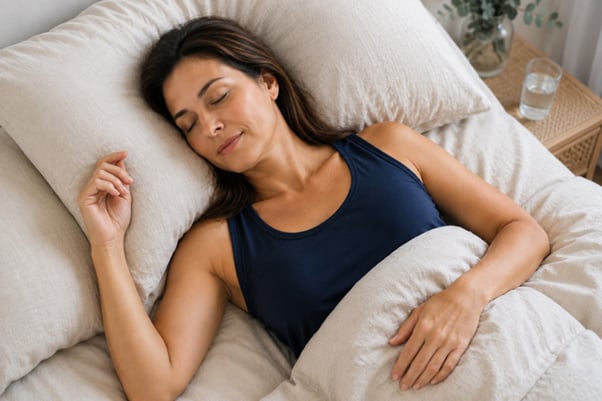
If you’ve ever kicked off the doona at 2am, flipped your pillow searching for the cool side, or woken up feeling like you’ve just run a marathon in your sleep, you’re not alone.
For many women navigating perimenopause and menopause, overheating at night becomes one of the most frustrating and disruptive symptoms. Night sweats, hot flushes, and sudden changes in body temperature can make it difficult to fall asleep and even harder to stay asleep.
While hormone fluctuations are often the main culprit, what many women don’t realise is that their sleep environment can either help or worsen the problem. From bedding and room temperature to the fabrics we wear against our skin, small changes can make a significant difference to comfort and sleep quality.
As someone who has always struggled with overheating at night, I became fascinated by the role fabric plays in temperature regulation and sleep. That journey eventually led me to create The Night Edit, but long before that, it started with a simple question: why was it so difficult to find sleepwear that felt genuinely comfortable when your body was running hot?
Why Menopause Makes You Feel Hot at Night
During perimenopause and menopause, fluctuating hormone levels can affect the body’s internal thermostat. As oestrogen levels change, the brain can become more sensitive to even small increases in body temperature.
The result can include:
- Night sweats
- Hot flushes
- Restless sleep
- Frequent waking
- Daytime fatigue
While we cannot control hormonal changes, we can create a sleep environment that supports the body’s natural cooling processes.
Why Fabric Choice Matters
Many women focus on cooling mattresses, fans, or air conditioning, but the fabric closest to your skin often has the greatest influence on overnight comfort.
When sleepwear traps heat and moisture, it creates a warm microclimate around the body. As perspiration builds, fabric can become damp and cling to the skin, increasing discomfort and making temperature fluctuations feel even more intense.
Many synthetic fabrics tend to trap heat and reduce airflow, which can worsen overheating and leave you feeling sticky and uncomfortable throughout the night.
This is where fabric performance becomes important.
What Makes Bamboo Different?
Bamboo has become increasingly popular among women experiencing menopause symptoms because of its combination of breathability, softness and moisture management.
The bamboo viscose used in modern sleepwear helps move moisture away from the skin and allows airflow around the body, supporting a cooler and more comfortable sleep environment.
Women often choose bamboo sleepwear because it is:
- Lightweight and breathable
- Soft against sensitive skin
- Moisture-managing
- Comfortable year-round
- Less clingy than many synthetic fabrics
While no fabric can eliminate night sweats entirely, choosing breathable materials can help minimise discomfort and support better quality sleep.
Five Ways to Create a Cooler Sleep Environment
Improving sleep is rarely about one magic solution. Often, it is a combination of small changes working together.
- Keep Your Bedroom Cool
Sleep specialists often recommend a bedroom temperature of around 18°C where possible to support the body’s natural overnight cooling process.
- Choose Breathable Sleepwear
Opt for moisture-managing fabrics that encourage airflow and help keep you comfortable throughout the night.
- Upgrade Your Bedding
Natural fibres such as bamboo, can help reduce heat retention and improve airflow around the body.
- Try a Warm Shower Before Bed
A warm shower before bed can encourage the body’s natural cooling response afterwards, helping prepare you for sleep.
- Stay Hydrated
Keeping water nearby can help you feel more comfortable if you wake feeling warm or flushed during the night.
The Small Details Matter Too
Comfort is not only about fabric.
Sometimes it is the little things that keep us awake.
Buttons that pull apart when you move.
Drawstrings that dig into your waist.
Scratchy labels rubbing against the back of your neck.
Shorts that ride up every time you roll over.
When I later created The Night Edit, I applied many of these lessons to the design process.
The goal was simple: remove the small frustrations that can interrupt comfort and sleep.
That meant:
- No buttons
- No drawstrings
- No neck tags
- Relaxed waistbands
- Longer shorts for better coverage
- Functional pockets
For women looking for breathable sleepwear options, fabrics such as cooling bamboo sleepwear can help support comfort during warmer nights.
Some women prefer the airflow of a lightweight bamboo nightie, while others enjoy the extra coverage offered by women’s bamboo pyjama sets without feeling overheated.
Better Sleep Starts With Comfort
Menopause and perimenopause can bring many challenges, but discomfort should not be one of them.
While no fabric can completely eliminate night sweats, choosing breathable materials and creating a cooler sleep environment can help support more comfortable, restorative rest.
Sometimes the path to better sleep is not about adding more. It is about removing the things that stand in the way.
And when it comes to sleep, comfort is never a luxury. It is an investment in your wellbeing.
Kristin King
Founder, The Night Edit