
There is one simple thing you can do to help prevent and treat constipation: drink enough liquids.
If you’re feeling a little backed up, know that you’re not alone. In fact, constipation affects 15 percent of the world’s population, according to a January 2020 study in Gastroenterology.
Staying hydrated with water and other fluids can help get things going and prevent you from getting backed up in the first place.
In a study assessing the diets and stool consistency of more than 9,000 adults (April 2013 results published in the American Journal of Gastroenterology), not getting enough liquids was a primary factor associated with constipation – even more so than fibre.
There’s no hard and fast rule for how much you need to drink to stay hydrated, but in general, people assigned female at birth (AFAB) need about 12 cups of water each day and people assigned male at birth (AMAB) need about 16 cups, per the Mayo Clinic.
Food provides us with about 20 percent of our fluid needs for the day, which means we need to be drinking the rest.
But if you’ve found yourself a little backed up, sipping certain beverages is one of the best natural remedies for constipation. Here are six drinks to help constipation and relieve a backed-up belly.
1. Coffee
Coffee can get you going in more ways than one. “Your morning cup of coffee can also mean a morning poop — coffee poops are a real thing,” says gut health expert Amanda Sauceda, RDN, CLT. Caffeinated coffee may increase the amount of acid your stomach produces as well as boost colon movements, which can lead to a laxative effect, per a June 2017 review in the World Journal of Gastroenterology. Decaffeinated coffee might have a similar effect, as explained in a small study published in April 1990 in the journal Gut.
2. Water With Chia Seeds
OK, water is an obvious choice and it should be your first solution if you’re feeling backed up. But water with chia seeds is a double-whammy that works.
“Many of us are dehydrated when we wake up, so we should all start our mornings with a glass of water,” Sauceda shares.

“You can double-up the pooping effect by adding a teaspoon of chia seeds and then letting the seeds soak for a few minutes. Most of us don’t eat enough fibre and chia seeds are packed full of fibre.” And it’s the type of fibre found in chia seeds that make them so effective. About 87 percent of the fibre found in the tiny seeds is insoluble, according to the Academy of Nutrition and Dietetics – and we know insoluble fibre helps to relieve constipation.
3. Prune Juice
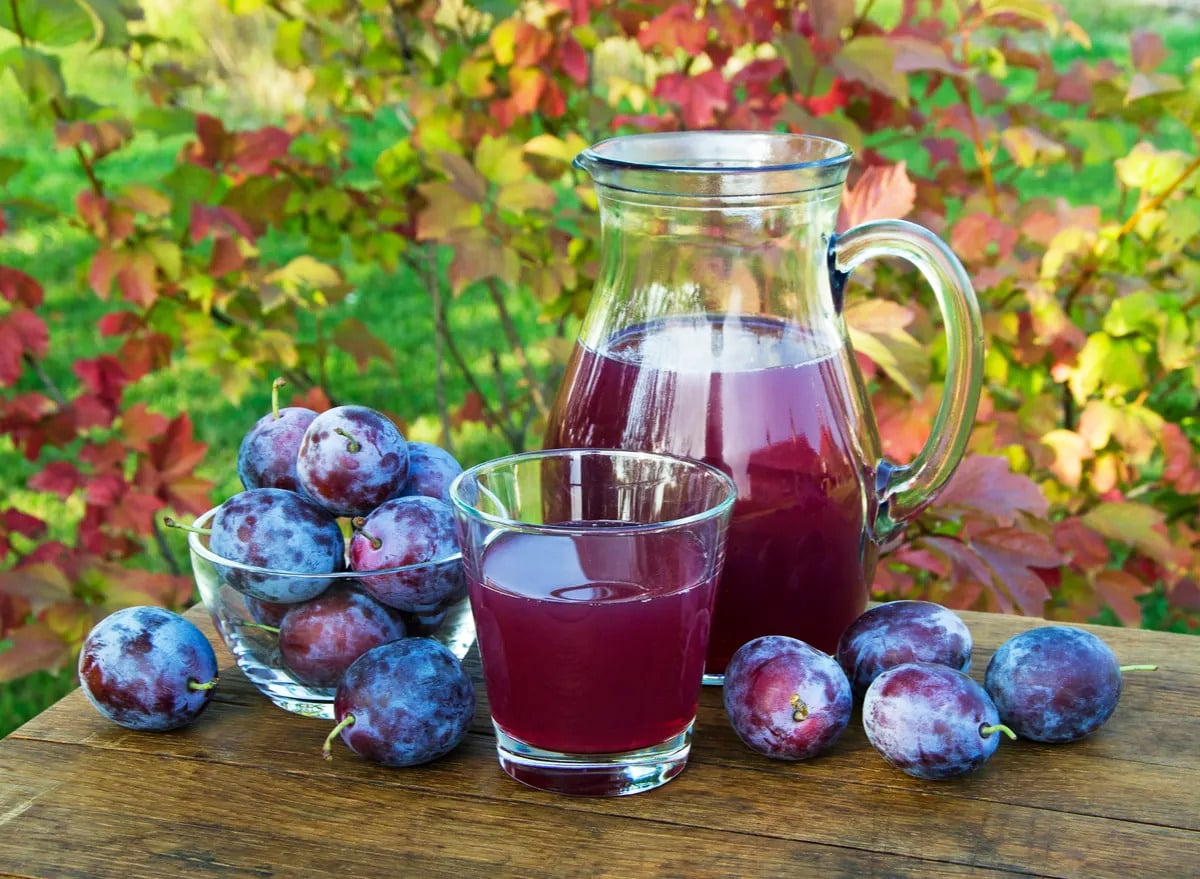
Prunes have been a long-time go-to for staying regular and it’s because they’re so effective. This goes for prune juice too. “Prunes are notorious for helping us poop,” shares Sauceda. “Prunes or prune juice contain sorbitol, which our body doesn’t digest well. This sugar pulls water into our gut, making us poop more easily.” If you’re drinking prune juice for constipation, start with a 1/2 cup serving daily for a few days and adjust as needed.
4. Smoothies
When done right, smoothies can be the (almost) do-it-all drink. Unlike juice, they retain the fibre from added fruit and vege. Dietary fibre is so good for our health, especially our digestive health, plus there are specific components found in common smoothie ingredients that can help keep you regular, or “clean you out,” such as fibre and digestive enzymes.
5. Kefir
This one can go either way because kefir is a dairy product and dairy can back some people up. But kefir is also a rich source of probiotics and early research suggests they can help get your gut moving. After receiving a daily kefir beverage for four weeks, stool frequency and consistency were increased and laxative use decreased compared to baseline in a small group of people who live with chronic constipation, per a July 2019 clinical study in the Turkish Journal of Gastroenterololgy.
6. Aloe Vera Juice
Aloe vera juice has been used historically to treat digestive issues, such as constipation, according to a January 2020 review in Systematic Reviews. The pulp or latex of aloe leaves contains a compound called anthraquinone, which is said to be responsible for its laxative effect, according to the National Institutes of Environmental Health Sciences (NIEHS).
Aloe may also be useful in treating digestive conditions like IBS, where chronic constipation can be a symptom. Aloe vera was tied to improvements in IBS symptoms, including constipation, according to an October 2018 review in the Journal of Neurogastroenterology and Motility. Researchers say this could be because compounds in aloe may work against inflammation in the digestive tract.
All that said, aloe vera latex may not be suitable for everyone with constipation. Taking too much of a laxative or taking them for prolonged periods can cause symptoms like dehydration and diarrhoea. Aloe vera may also interact with medications such as diabetes and blood thinning medications. So it would be wise to talk with your doctor before adding aloe vera juice to your routine if you are are taking any medications.
In addition, if you are buying aloe vera juice, look for options that are made with few ingredients and don’t have added sugar.
Magnesium isn’t a drink you can buy on the shelves of your local supermarket, but it is something else you can add to your beverages to help with constipation. “Magnesium can cause looser bowel movements and/or help with constipation,” Sauceda says.
“Adding magnesium supplements to your water could be helpful. However keep in mind, if you have to rely on magnesium (or anything for that matter) to poop that’s a problem you’d want to see a doctor about.” Magnesium is found in many laxatives and it’s possible to take in too much of this mineral, as explained by the National Institutes of Health.
SOURCE: Everyday Health