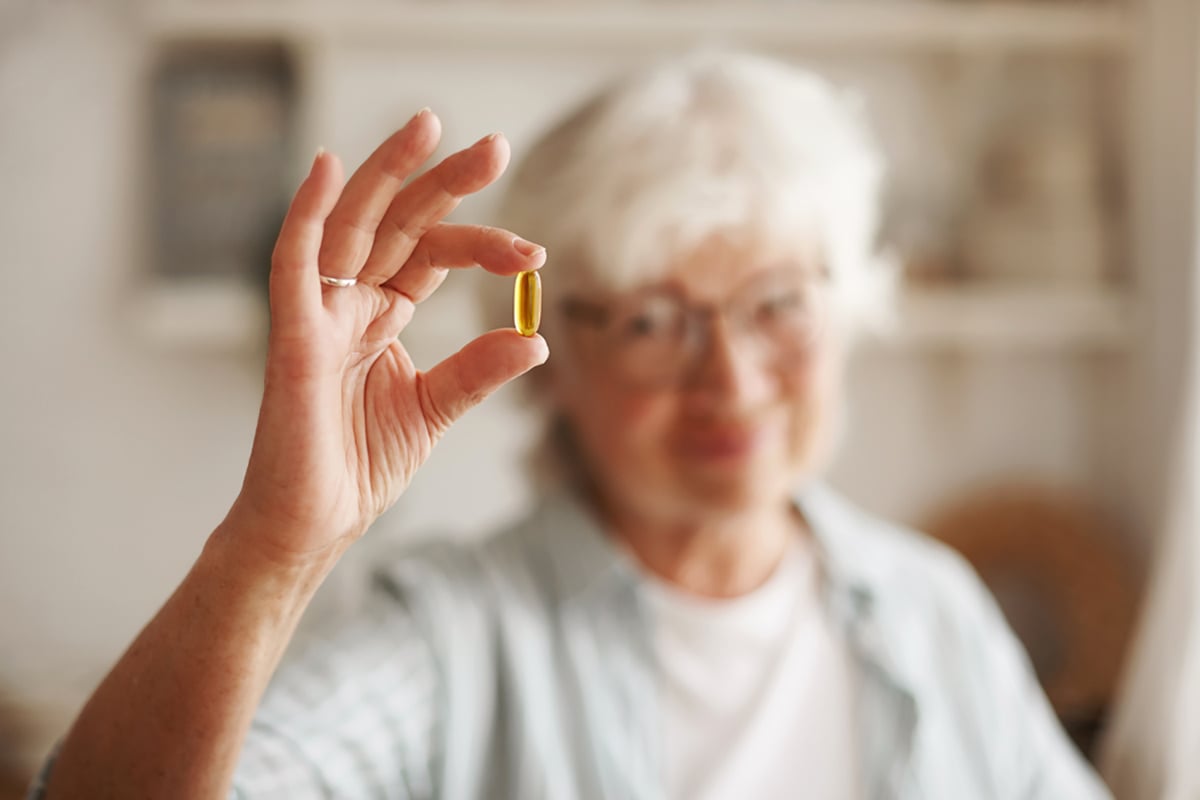
Cheap daily supplements are changing how scientists view the gut and its connection to the brain.
In 2024, a rigorous twin study published in Nature Communications found that taking daily protein and prebiotic supplements could improve memory test scores in people over age 60.
The study has been cited nearly 100 times since, and the idea has inspired whole new clinical trials investigating how some supplements may protect against dementia.
Later that year, scientists at Wageningen University in the Netherlands launched the PRECODE clinical trial, to look at the gut-brain health effects of prebiotics in older adults with suspected cognitive decline.
This was the first human study to investigate the combined cognitive and microbial effects of three distinct dietary fibres: chicory inulin, resistant dextrin, and seaweed polysaccharide, when compared to a placebo (maltodextrin).
For 26 weeks, participants over 60 consumed these dietary fibres twice a day, mixed into water, tea, or coffee, and they had regular brain scans and cognitive tests to track how they were faring.
The results will come out in 2027 when the trial finishes.
But meanwhile, we know that inulin, a dietary fibre in the fructan class, is the same dietary supplement that proved so good for the brain in the first 2024 twin study.
During that double-blinded trial, researchers tested two inexpensive plant-fibre prebiotics that were available over-the -counter in many countries.
The other, fructooligosaccharide (FOS), is a plant carbohydrate often used as a natural low-calorie sweetener.
To look into how these supplements affected the ageing brain, researchers at King’s College London enrolled 36 pairs of twins, all at least 60 years old.
Each duo was randomly split: one twin received a daily prebiotic mixed into protein powder, while the other received a placebo powder.
The twins who unknowingly took inulin or FOS generally scored higher on a cognitive test three months later.
What’s more, the daily fibre supplements were linked to subtle changes in the gut microbiome between twins.
The beneficial Bifidobacterium for instance, was more plentiful in those taking inulin or FOS.
Studies on mice suggest that Bifidobacterium reduces cognitive deficits by regulating gut-brain connections.
“We are excited to see these changes in just 12 weeks. This holds huge promise for enhancing brain health and memory in our ageing population,” said Mary Ni Lochlainn, a Geriatric Medicine Researcher at King’s College London, when the findings were published in 2024.
“Unlocking the secrets of the gut-brain axis could offer new approaches for living more healthily for longer.”
King’s College London is home to the UK’s largest adult twin registry, and twin studies are highly valuable when it comes to differentiating between the effects of genetics and the environment on human health.
Past studies on rodents suggest that high-fibre supplements, such as inulin and FOS, can ‘feed’ the colon’s microbiome, allowing ‘good’ bacteria to thrive.
Some of these bacterial players are also linked to improved cognitive function in both mice and humans.
Evidence for the close relationship between the gut and the brain is growing year on year. Some experts are now so convinced by the results that they refer to the gut as the body’s second brain.
But the way these two nervous systems work together still remains a mystery.
The twin study at Kings College London hints that consuming certain ‘brain foods’ could be a promising way to treat cognitive decline, adding to research suggesting key nutrients may be able to slow its progress.
“These plant fibres, which are cheap and available over the counter, could benefit a wide group of people in these cash-strapped times. They are safe and acceptable too,” said Geriatrician Claire Steves from Kings College London.
“Our next task is to see whether these effects are sustained over longer periods and in larger groups of people.”
That’s what the PRECODE trial seeks to address. The trial investigators hope this ongoing study into fibre supplements will “provide an in-depth evaluation of the microbiota-gut-brain axis in older adults, at risk of cognitive decline.”
In 2025, researchers reported that in humans and mice, a lower Bifidobacterium-to-Akkermansia ratio in the gut microbiome was linked to multiple sclerosis, and that this imbalance was also associated with more severe disease.
Whether these deficiencies can be remedied with supplements however, remains unknown.
The gut has its fingers in many bodily ‘pies’, including the immune system and the central nervous system.
Feeding its microbiome certain prebiotics and probiotics could open the door to treating a plethora of illness and diseases.
The PRECODE trial could give us a first taste of that possibility.
The twin study was published in Nature Communications.
SOURCE: Science Alert