
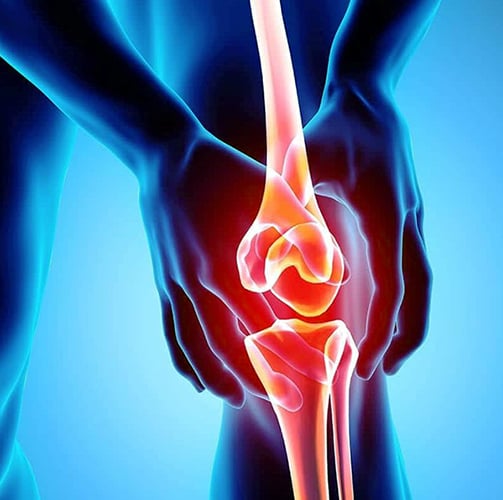
Osteoarthritis in the knees can be very painful and very hard to treat, and often occurs when the protective cartilage around the bones wears away. In the most severe cases, it may require surgery and a knee replacement to provide relief for patients.
As the most common form of arthritis, it brings discomfort to hundreds of millions of people worldwide.
Now, in a bid to tackle that health crisis, researchers led by a team from the Charité – Universitätsmedizin Berlin in Germany have developed a new treatment approach that’s minimally invasive, safe, and impressively effective.
It’s based on a procedure called genicular artery embolization (GAE), which targets the abnormal blood vessels and additional pain-sensing nerves associated with osteoarthritis. Close off those blood vessels, the thinking goes, and the nerves (and pain) quieten down.
Previous blocking agents were antibiotics, which risked further inflammation and raised concerns about the spread of antibiotic resistance, but with GAE microscopic gel beads are used that gradually dissolve in the bloodstream.
“GAE is a whole new treatment regimen that targets abnormal hypervascularity around the joint and, in turn, modulates the pathological neurovascular environment,” says radiologist Florian Nima Fleckenstein, from Charité – Universitätsmedizin Berlin.
“By reducing both inflammation and pain, GAE with resorbable microspheres may be the first procedure that alters the course of the disease, slowing its progression.”
These “resorbable microspheres” are injected into the knee in a procedure that doesn’t need lengthy preparation or an extended hospital stay.
They then get to work blocking blood flow specifically through the additional blood vessels and nerves that have appeared with osteoarthritis – not interfering with blood flow to the knee in general.
The blockage (embolization) isn’t permanent, as the microscopic gelatin balls disappear within hours, but they help to break the cycle of inflammation and joint pain.
“By embolizing the pathological vessels, we’re able to normalise the vessel structure, and in turn, the neuronal structure of the knee,” says Fleckenstein.
“In our cohort, we saw a significant drop in pain and a significant increase in function, including sports, recreation and daily activity. Most importantly, quality of life significantly increased.”
The numbers show how effective the treatment was.
The study followed 194 people receiving the treatment for osteoarthritis-related knee pain, with a mean age of 69, and who hadn’t previously responded to treatment with physiotherapy, anti-inflammatory drugs, or intra-articular injections.
At the start of the 12-month study period, the average baseline pain intensity was 7 out of 10; by the end, it was 3 out of 10.
Scores for daily activity, involvement in sports, recreation and quality of life, and osteoarthritis-related symptoms all improved significantly. No notable side effects were reported either.
“We believe these results carry real weight because they come from real-world data. With this broad, inclusive study design, our participants are exactly the patients that physicians encounter every day in their practices,” says Fleckenstein.
“For the right patient, it can mean lasting relief from a single, minimally invasive procedure – a meaningful new option between injections and joint replacement.”
While the study didn’t involve a control group for comparison, and all the participants came from one hospital, the fact that the treatment worked across the board is hugely encouraging – and means it’s an option that’s definitely worth pursuing.
Future research can look at larger groups of people for longer periods of time (past the 12-month mark), while a fully randomised clinical trial would prove its effectiveness compared to an alternative treatment or a placebo.
There’s still work to do then, but together with other promising treatments, there’s fresh hope for treating this debilitating disease.
The research has been published in Radiology.
SOURCE: Science Alert