
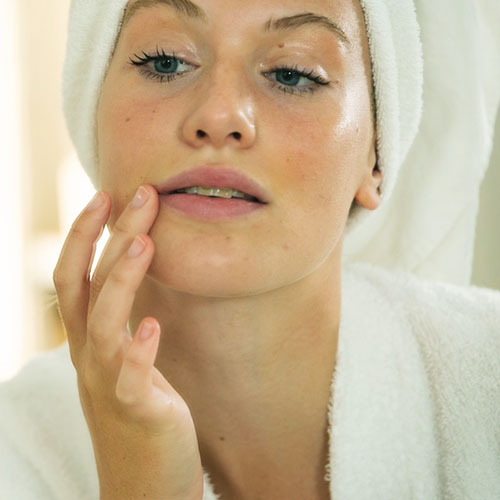

Mature skin doesn’t have a standard definition. There isn’t a specific age that once crossed, puts you in this category. But dermatologists say that your skin starts to change in your forties, when concerns like dryness, fine lines and wrinkles become more common.
“Oil and collagen production peak from ages 15 to 25, and then we ride that wave until our forties,” says Heather Rogers, MD, a board-certified Dermatologist and co-founder of Modern Dermatology in Seattle.
Production of the sex hormone oestrogen typically begins to decline in perimenopause, the time period about 8 to 10 years before menopause, which usually starts in a woman’s mid-forties. As a result, decreases in oil and collagen production leave skin dryer, more irritated, and more prone to developing fine lines and wrinkles.
Age is just a number, but if your skin is exhibiting signs of ageing that concern you, these dermatologist-recommended skin-care hacks may help.
1. Tweak Your Retinoid
Retinoids are a Vitamin A derivative that can improve skin cell turnover and collagen production, decrease discolouration, and help smooth lines and wrinkles.
Exactly who should use retinoids and when you should start them will be based on your skin concerns and medical history (for example, they can’t be used during pregnancy or while breastfeeding), so it’s best to consult with a dermatologist.
However, as skin matures and becomes more dry, it may be more prone to irritation from retinoids. “During your forties is one of the first times you might notice that skincare ingredients are irritating your skin. You may find you can no longer tolerate a product you have used for years,” says Dr. Rogers.
If that sounds like your experience, you don’t necessarily have to give up on retinoids. Rogers recommends making one of these tolerance-boosting tweaks to how you use them:
Reduce Frequency
Use your retinoid every other day, instead of daily.
Reduce the Amount You Use
If your dermatologist previously recommended applying a pea-sized amount to your skin, ask them about using a smaller dose.
Change the Product You Are Using
“If you’ve been using a prescription-strength retinoid, try a retinol instead (a less potent over-the-counter version). If that’s still too much, you can consider using bakuchiol, a plant extract that can also stimulate collagen production that has less risk of side effects,” suggests Rogers. One systematic review of 29 articles concluded that bakuchiol is a retinol alternative with anti-ageing, anti-bacterial, and anti-inflammatory properties, but it noted that additional studies are warranted.
2. Try Applying a Second Layer
Dryness is a common problem for mature skin, due to the aforementioned reduction in oil production. One hack for hydration is to apply a thick cream or ointment as a second layer over your regular moisturiser before bedtime. “The aim is to seal in hydration while you sleep,” Rogers says.
3. Reconsider Washing Your Face in the Morning if Your Skin Is Dry
Depending on your skin type, you may be able to skip morning cleansing. “While people with acne-prone or oily skin should stick to twice-daily cleansing, if you have dry skin, cleansing can strip oil and make dryness worse,” says Rogers.
But that doesn’t mean you should roll out of bed and just go about your day. Rogers recommends splashing your face with lukewarm water and gently blotting off excess moisture with a towel. “Starting with a clean – but not stripped – canvas allows the active ingredients in your morning skincare routine to be better absorbed into your skin,” she explains.
“If you do use a cleanser, minimise dryness and irritation by washing your face with one that is gentle, non-irritating, and fragrance-free,” says Jessica Garelik, DO, a board-certified Dermatologist in New York City. (You can identify one of these by the label, which will use words like gentle, fragrance-free, for sensitive skin, or barrier protecting.) “To make sure your cleanser is hydrating, look for products with ingredients that help lock in moisture including lipids, ceramides, or humectants,” Dr. Garelik recommends.
4. Change Up Your Vitamin C Serum
Vitamin C is a powerful antioxidant that may soak up and neutralise skin-damaging free radicals. Plus, vitamin C may also boost collagen to promote firmer, smoother skin. Plus it inhibits the production of melanin (skin pigment) to decrease discolouration.
Rogers recommends applying a vitamin C serum to clean or freshly water-splashed skin in the morning. (You can start using these products in your twenties, though they can be beneficial at any age.)
Vitamin C is acidic, and it can cause irritation (especially for more irritation-prone, dry, mature skin), so Rogers recommends looking for a formulation that contains THD ascorbate, a fat-soluble form of vitamin C (this will be noted on the label or in the product description). “THD is much better tolerated by mature skin,” she says. “That’s because the THD version has a neutral pH, which is gentler on skin.”
5. Keep Regularly Exercising
Research suggests that regular exercise may increase blood flow to the skin, boost skin moisture, and improve skin structure, possibly by affecting hormone secretion, though further studies are needed.
“Exercise promotes blood flow to muscle and to the skin, particularly body skin that has laxity or cellulite,” says Rogers. For overall health, aim for 30 minutes per day of moderate exercise most days of the week.

6. Use the Right Eye Cream
Age-related discolouration, puffiness, and wrinkles are common eye area concerns. “Using an eye cream may be helpful in improving the appearance of the skin around your eyes,” Garelik says, and this can be started at any age.
According to research, specific eye cream ingredients may help with hyperpigmentation (Niacinamide, caffeine, vitamin E and vitamin C, puffiness (caffeine), and wrinkles (caffeine, retinol, vitamin C, peptides, hyaluronic acid or niacinamide).
“In addition, if you’re struggling with eye puffiness, using cool compresses, sleeping with your head slightly elevated, and limiting high-sodium foods can all help deflate the eye area,” says Garelik.
“Some medical conditions, such as allergies or thyroid disease, can also cause under-eye puffiness,” so see a board-certified Dermatologist if you feel the need for an evaluation. They can help identify the cause and create a treatment plan that’s specific for you.”
7. Consider Oral Collagen
Collagen is a protein in the body that supports the structure of skin and connective tissues. Rogers recommends asking your dermatologist about oral collagen, a supplement that may improve the appearance of skin ageing. Some dermatologists specifically recommend hydrolysed collagen, a form of oral collagen that is easy to digest and better absorbed.
Although studies are mixed and research is limited and evolving, one recent systematic review and meta-analysis out of Taiwan of 26 randomised controlled trials involving 1,721 patients found that oral collagen supplementation significantly improved skin hydration and elasticity, compared with the placebo group. However, researchers noted that further large-scale trials are necessary to confirm these findings.
“Oral collagen is not life-changing, and studies suggest a small improvement in fine lines around the eyes. It is well-tolerated and easy to take [for most healthy people]. I use it myself,” Rogers says.
Be sure to speak to your healthcare provider before starting oral collagen – or any supplement – as supplements are not regulated by the U.S. Food and Drug Administration (FDA) and may interact with certain conditions and drugs. One consideration when taking collagen is it may contain toxins and heavy metals, given that it’s typically made from animal parts.
Always look for a supplement that has third-party testing, which is an indication of its safety and purity.
8. Talk to Your Dermatologist About Vitamin B3
As the Skin Cancer Foundation points out, 1 in 5 Americans will develop skin cancer by age 70.
Nicotinamide, a form of Vitamin B3 also known as niacinamide, may discourage skin cancer development. A recent retrospective study of 33,822 veterans found that taking 500 milligrams (mg) of nicotinamide two times per day for more than 30 days was associated with a 14 percent reduction in skin cancer risk.
When started after a first skin cancer was diagnosed, it reduced the risk of a subsequent skin cancer by 54 percent. However, it’s important to note that excessive amounts of nicotinamide (more than 3,000 mg per day) may cause liver damage, so speak to your doctor about proper dosing, and never take nicotinamide if you have a history of liver disease.
Rogers recommends asking your doctor or dermatologist about taking nicotinamide in conjunction with an antioxidant plant extract called Polypodium leucotomos. While research is limited, emerging evidence suggests the efficacy and safety of this extract in the treatment and prevention of several skin diseases, such as non-melanomia skin cancer, melanoma, pigmentation disorders, and photosensitivity, notes one review out of Italy.
“It doesn’t replace your sunscreen, but provides added [sun-protection] benefits,” Rogers says. Remember that you should always speak to your doctor before starting any new supplements.
The Takeaway
- Mature skin does not have an official definition, but dermatologists describe it as skin that shows signs of ageing, such as dryness, hyperpigmentation, and lines and wrinkles.
- Some anti-ageing skincare tips include skipping cleansing in the morning if your skin is dry; applying a second layer of thick cream or ointment on top of the first; and adjusting retinoid use.
- Certain supplements may improve skin health and may even reduce the risk of skin cancer, such as nicotinamide (a form of vitamin B3). But be sure to speak to your dermatologist or primary care doctor before starting any new supplement, as they aren’t regulated by the FDA and may interact with certain medications and chronic conditions.
SOURCE: Everyday Health