
For many who struggle with sleep health, the search for rest eventually leads to medication. But new research suggests this may come with some alarming side effects.
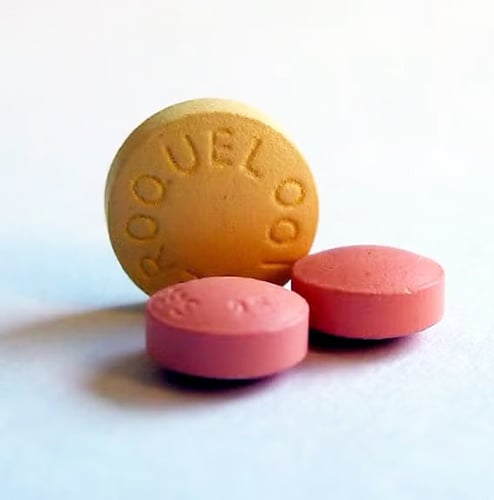
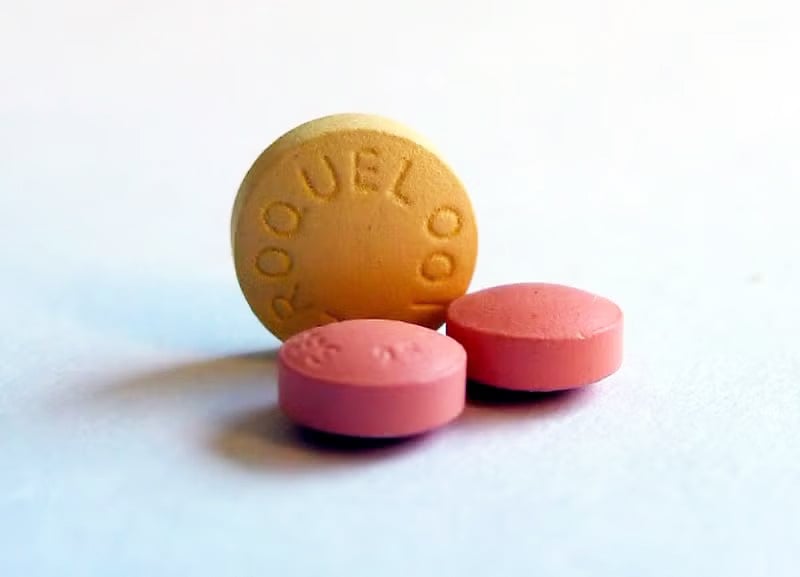
Quetiapine (sold as Seroquel) is an antipsychotic drug approved for conditions including schizophrenia and bipolar disorder, but studies have shown it can also improve sleep quality, so it’s often prescribed at lower doses as an ‘off-label’ treatment for insomnia.
“There’s a growing belief that low‑dose quetiapine is a relatively harmless way to help people sleep,” says first author and sleep scientist Cricket Fauska, from Flinders University in Australia. “However our results show it’s not that simple.”
Fauska and colleagues conducted a small clinical trial to assess the drug’s effect on people with obstructive sleep apnoea, the most common type of sleep disorder.
Obstructive sleep apnoea occurs when the upper airway is intermittently blocked during sleep, leading to headaches, snoring, and increased tiredness the next day. Almost a billion people worldwide are thought to be affected by it.
Experiments on 15 people with obstructive sleep apnoea and problems staying asleep showed that while quetiapine was effective to some extent, there were worrying impacts for the participants the next day.
“Although participants slept longer and woke less overnight, their reaction times were slower the next day and their simulated driving performance was noticeably worse the next morning.”
The shifts were quite dramatic.
On a 10-minute psychomotor vigilance test, participants were slower to react after taking quetiapine when compared to a placebo. Their attention lapses during the test also rose from a median of 2 after placebo to 10 after quetiapine.
In the driving simulation, participants drifted an extra 33 percent farther from the centre of their lane, on average, after being given quetiapine compared with placebo.
For actual crashes in the simulator, the rate almost doubled with quetiapine compared to placebo, though the relatively small sample size of this study means the statistical effect was limited (it may have been down to chance).
“What was particularly concerning is that some people didn’t feel especially sleepy the next day, despite performing worse on objective tests,” says Fauska.
“That mismatch between how people feel and how they actually function poses a serious safety risk, especially when it comes to driving.”
The study does not show that quetiapine is always unsafe. Doctors regularly prescribe medications off-label when the benefits may outweigh the risks, and quetiapine has been shown to be beneficial for sleep. But the researchers are calling for tighter regulation of the drug’s prescription.
Obstructive sleep apnoea and insomnia often appear together, but crucially, around 80 percent of people with the sleep apnoea condition are thought to be undiagnosed.
People with sleep apnoea may wake often or struggle to stay asleep, which can make their symptoms difficult to pick apart from insomnia.
That means a significant number of people could be using a medication that appears to work in improving sleep quality, but which seriously impairs attention and reaction times the next day – even if the individuals don’t feel any different.
“Our findings suggest quetiapine should not be used as a routine sleep medication in people with known or possible sleep apnoea, particularly when next‑day alertness is critical,” says sleep scientist Danny Eckert, from Flinders University.
The researchers also point to growing evidence that there’s no one-size-fits-all treatment for obstructive sleep apnoea.
The next step is to test quetiapine in larger groups, at different doses, and over longer periods. This study involved only one night of quetiapine and one night of placebo, so it cannot show what happens with repeated use.
“Sleep apnoea is a complex condition with different underlying drivers in different people,” says Eckert.
“What we’re learning is that treatment needs to be tailored – using the right approach, or a combination of approaches, for the individual rather than defaulting to sedating medications.”
The research has been published in Annals of the American Thoracic Society.
SOURCE: Science Alert